
![20210830_105511[1]_edited_edited_edited_edited_edited.jpg](https://static.wixstatic.com/media/c4908e_7d4b75c96bf942f1992de00c4bccc849~mv2.jpg/v1/fill/w_416,h_430,al_c,q_80,usm_0.66_1.00_0.01,enc_avif,quality_auto/c4908e_7d4b75c96bf942f1992de00c4bccc849~mv2.jpg)
The Team
The team is composed of young researchers (median age of team member is 35 years old) who nevertheless have experience or gain experience in building material research, including mix-design, testing thermal and mechanical performance, and numerical modelling.


The Team

Khadim Ndiaye
Associate Professor & Scientific Partner
My name is NDIAYE Khadim, I am Associate Professor in the Civil Engineering Department at CY Cergy Paris University. I hold a Master's degree in Civil Engineering and obtained my PhD at the University of Toulouse (LMDC INSA Toulouse – UPS). My teaching field includes construction materials, construction technology, structural dynamics, renewable energy, heat transfer, fluid network in building, and intellectual properties

Alexandre Pierre
HDR Associate Professor
PhD supervisor and scientific partner
I am A. Pierre and I obtained a Master’s Degree from the Université of Rennes 1 in 2008. Between 2009 and 2013, he worked on his PhD on the rheology of calcium-sulfate suspensions at the Institut National des Sciences Appliquées, in Rennes, under the supervision of C. Lanos. From 2012 to 2014, I had a lecturer position (ATER) at the Civil Engineering Department of the Université de Bretagne Sud. Since 2014, I have been Associate Professor at CY Cergy Paris Université

Tien-Tung Ngo
HDR Associate Professor
PhD supervisor and scientific partner
I am a young HDR Associate Professor who used to work on concrete rheology and pumpability. I obtained a Master Degree in 2005 and did my phd work in 2009 on the relation between the mix-design and pumpability of concrete.

Kevin Mc Donald
Numerical Physics intern
Currently intern in the L2MGC with the main goal to conclude my master degree in numerical physics, I am working on the fluid's penetrability in cement powder.
To do so, I am using Flow3D software which allow us to make fluids mecanics simulations. On top of that, I developped a Python program which can make a video analysis of our imbibition to plot its evolution. I also help for the experiments.
Valentine Danché
Phd Student
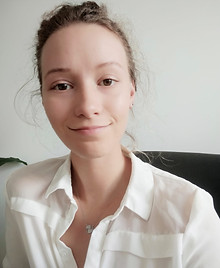
After passing my engineer diploma in materials and nanotechnologies in Paris, I am now fully engaged for 3 years in the BREATHE project !
Consequently, I am focused on material sections from the lab experiments and simulations to the next steps improvement of the particle-bed 3D printer.


Gabriel Sansom
Associate Professor & Scientific Partner
G. Samson made his PHD in INSA Rennes, under the supervision of C. Lanos on production and characterization of mineral foams. He was then ATER in INSA Toulouse for 2 years and continue his research on alkali-activated materials. Then, he performed a post-doc on the development of a new probe for non-destructive assessment of corrosion. Since two years, he is associate professor at INSA Toulouse and his researches focus on low-carbon concrete, alkali-activated materials and corrosion .

Aurélie Papon
Associate Professor & Scientific Partner
After her PhD at Research Institute in Civil and Mechanical Engineering (GeM, Ecole Centrale Nantes) and a post-doc at Earth Systems Science Computational Centre (ESSCC, University of Queensland, Australia) in numerical modeling in soil mechanics, A. Papon joined Laboratory for Materials and Construction Works Durability (LMDC, INSA Toulouse-UPS) in 2012 as an associate professor. Her research interests focus on numerical modeling of fresh concrete especially for 3D printing.

Yacine Ait-Oumeziane
Associate Professor & Scientific Partner
Y. Ait Oumeziane received the Ph.D. degree in civil engineering from the Université of Rennes 1, Rennes, France, in 2013. He is currently an Associate Professor with the ENERGIE Department of the FEMTO-ST Institute affiliated with the CNRS. His research interests are focused on heat, air and moisture transfer in porous media, passive solar systems and hygrothermal comfort for the inhabitants.